


Hey there! I'm a supplier of FFC flat flexible cables, and I often get asked this question: "How many times can FFC flat flexible cable be bent?" Well, let's dive right into this topic and find out.
First off, what exactly is an FFC flat flexible cable? FFCs are those super - handy cables made up of multiple flat conductors sandwiched between two layers of thin insulation. They're used in all sorts of applications, from consumer electronics like FFC Cables for TV to high - tech equipment that requires high - frequency data transmission, such as Flexible Flat Cable for High Frequency. And let's not forget about the Flexible Flat Cable Connector, which helps to connect these cables to different devices.
Now, back to the main question. The number of times an FFC can be bent depends on a bunch of factors. One of the most important ones is the construction of the cable. For example, the type of conductors used matters a lot. Copper is a common choice for conductors in FFCs because it's a great electrical conductor. But different grades of copper can have different levels of flexibility and durability. High - purity copper tends to be more ductile, which means it can handle more bending cycles without breaking.

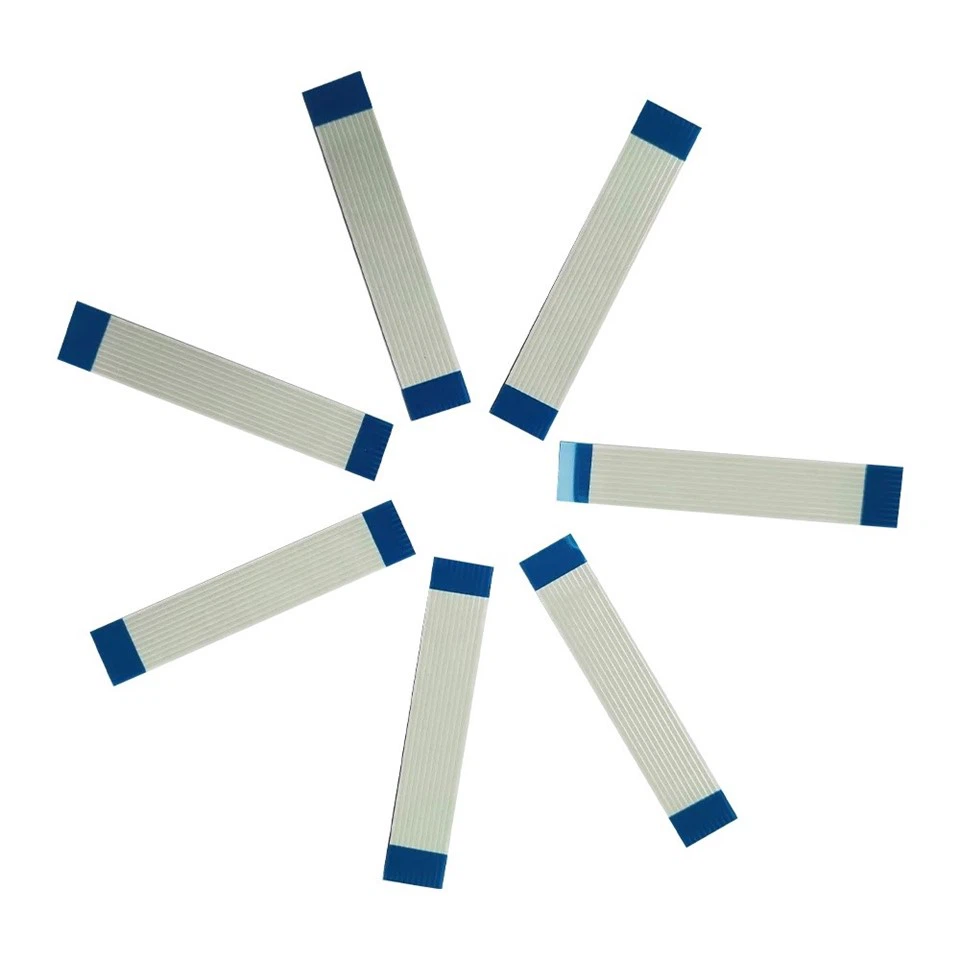
The thickness of the conductors also plays a role. Thinner conductors are generally more flexible, but they might not be as strong as thicker ones. So, a cable with very thin conductors might be able to bend a lot of times in the short term, but over time, it could be more prone to failure from repeated bending. On the other hand, a cable with thicker conductors might be less flexible initially but could withstand more bending cycles in the long run.
The insulation material is another key factor. There are different types of insulation materials used in FFCs, like polyester and polyimide. Polyester is a more common and cost - effective option. It offers good flexibility and moderate durability. Polyimide, on the other hand, is a high - performance material. It can withstand higher temperatures and more bending cycles compared to polyester. In applications where the cable needs to be bent frequently, like in some folding smartphones or flexible displays, polyimide - insulated FFCs are often a better choice.
The way the cable is bent also affects its bending life. There are two main types of bending: dynamic bending and static bending. Static bending is when the cable is bent into a fixed position and left there. For example, in a TV where the FFC is bent to connect different parts of the internal circuit. In this case, the cable doesn't need to withstand a large number of bending cycles, but it needs to maintain its electrical performance over time in that bent state.
Dynamic bending, however, is more challenging. This is when the cable is bent and un - bent repeatedly. Think of a laptop hinge where the FFC is constantly being flexed as you open and close the screen. For dynamic bending applications, the cable needs to be able to handle a large number of bending cycles.
The radius of the bend is also crucial. A smaller bend radius puts more stress on the cable conductors and insulation. For example, if you bend an FFC with a very tight radius, the conductors are more likely to kink or break. Manufacturers usually specify a minimum bend radius for their FFCs to ensure the cable's longevity.
In general, for normal - duty FFCs used in typical consumer electronics, they can usually withstand anywhere from 10,000 to 100,000 bending cycles. These cables are designed for applications where the bending is not too frequent or severe. But for high - performance FFCs used in more demanding applications, such as medical devices or aerospace equipment, they can handle millions of bending cycles.
Let's take a look at some real - world examples. In a tablet device, the FFCs connecting the display to the main board might go through a few thousand bending cycles during the device's lifespan. This is because the tablet is opened and closed relatively infrequently. But in a robotics application, where the arms are constantly moving and the FFCs are bending and straightening all the time, the cables need to be able to handle hundreds of thousands or even millions of bending cycles.
We also need to consider the environmental conditions. Temperature, humidity, and exposure to chemicals can all affect the bending life of an FFC. High temperatures can make the insulation material more brittle, reducing its ability to withstand bending. Humidity can cause corrosion of the conductors, which can weaken them over time. And exposure to certain chemicals can damage both the conductors and the insulation.
As a supplier, we test our FFCs rigorously to ensure they meet the required bending cycle specifications. We use specialized equipment to simulate different types of bending, including dynamic and static bending, at different bend radii. We also test the cables under various environmental conditions to make sure they can perform well in real - world applications.
If you're in the market for FFC flat flexible cables, it's important to choose the right cable for your specific application. Consider factors like the number of bending cycles, the bend radius, and the environmental conditions. And if you're not sure which cable is best for you, don't hesitate to reach out. We're here to help you make the right choice. Whether you need FFC Cables for TV, Flexible Flat Cable for High Frequency, or Flexible Flat Cable Connector, we've got you covered.
So, if you're interested in purchasing FFC flat flexible cables for your project, feel free to contact us. We're ready to discuss your requirements and provide you with the best - fitting solutions. Let's work together to ensure your project runs smoothly with high - quality FFC cables.
References:
- Industry standards and guidelines for flexible flat cables
- Technical documentation from FFC cable manufacturers
- Research papers on the mechanical properties of flexible cables